Walk through Venice at Carnival and you will see hundreds of masks, from plain white faces to gold and feathers. Most of them go back to a handful of traditional types, each with its own story. Here is how to recognise them, what they meant and how to pick one you will enjoy wearing.
Start here
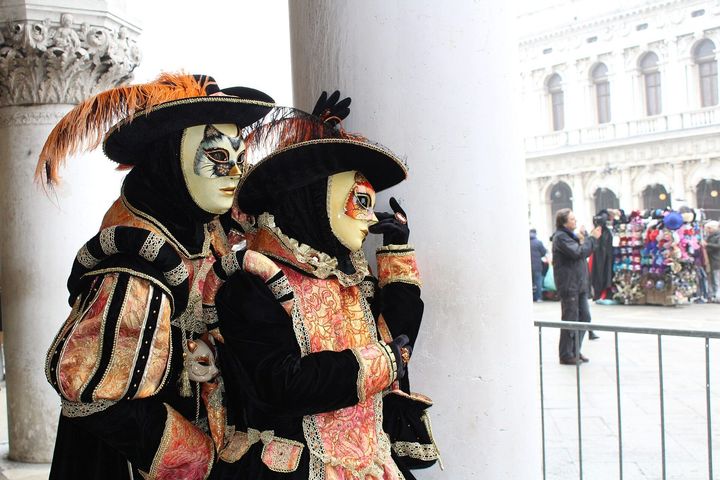
The best-known Venetian mask is the bauta: a white full-face mask with a jutting chin, worn with a black tabarro cloak. The moretta was a small black velvet oval that women held in place with a button between their teeth. The volto covers the whole face, the colombina is a decorated half mask and the gnaga is a cat mask. The long-beaked plague doctor began as medical clothing, not as a Carnival mask.
- Most famous
- Bauta with a tabarro cloak
- The silent mask
- Moretta, held in the teeth
- Traditional material
- Papier-mâché or leather
Why Venetians wore masks
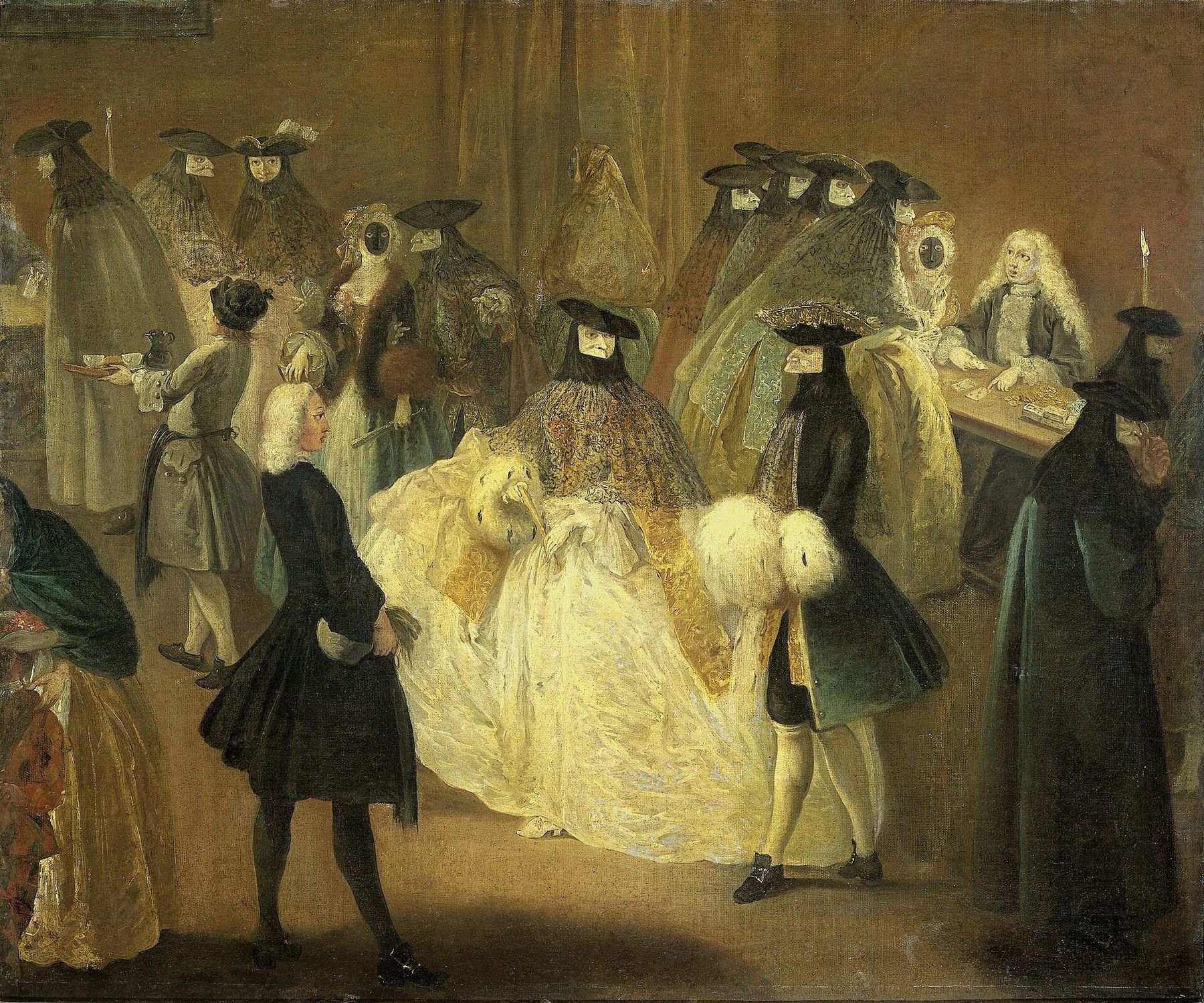
The official Carnival organiser dates the first evidence of Carnival in Venice to 1094. Masks gave Venetians of every class a few weeks of freedom: behind a mask, nobles and commoners could mix without the weight of their rank. People greeted any masked stranger with “Buongiorno, siora maschera”: good day, Madam Mask.
Venice even regulated the habit. A 13th-century law made it a crime for masked people to throw perfumed eggs, and mask makers had their own guild statute from 1436. Carnival disappeared at the end of the Republic and returned in 1979, after almost two centuries.
All the mask types at a glance
| Mask | What it covers | How to recognise it | The story |
|---|---|---|---|
| Bauta | The whole face | White, jutting chin, no mouth; with a tricorn hat and black cloak | Total anonymity; you could talk, eat and drink without lifting it |
| Moretta | An oval over the face | Small, black velvet, no straps | Held by a button between the teeth, so the wearer stayed silent |
| Volto (larva) | The whole face | A plain, smooth face, often white | The classic modern Venetian mask; tied with a ribbon |
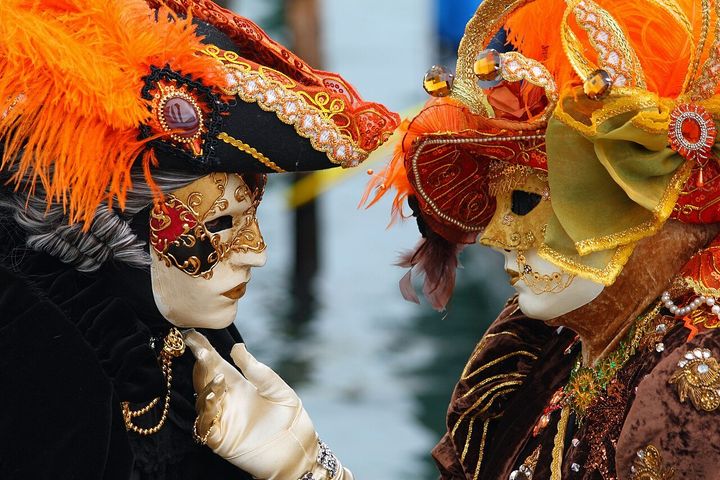
| Colombina | Eyes, nose and upper cheeks | A half mask with gold, crystals or feathers | Named after Colombina, the maid of Commedia dell’arte |
| Gnaga | The face | A cat’s face | Worn by men dressed as women, as a joke on social roles |
| Medico della peste | Face, with a long beak | White beak and round eye holes | Based on plague doctors’ clothing, not a Carnival mask at first |
| Arlecchino, Zanni | Upper face | Dark leather half mask, often a long nose | Characters from Commedia dell’arte theatre |
Use this table to recognise the masks you see. The first five come from the Venetian tradition; the last two arrived through medicine and theatre.
The bauta and tabarro: total anonymity
The bauta is probably the most famous mask of the Carnival. It covers the whole face, and its beak-like chin lets the wearer speak, eat and drink without taking it off. Worn with the tabarro, a large black cloak, and a tricorn hat, it hid not only the face but the whole body.
In 18th-century paintings by Pietro Longhi you see men and women in bauta paying visits and gambling at the Ridotto. Today it is a striking, simple choice if you want a historical look without bright colours.
Good to know A bauta is comfortable for a long day because you never have to lift it for a drink. Try one on with your glasses before buying: the nose bridge varies a lot.
The moretta: the silent mask
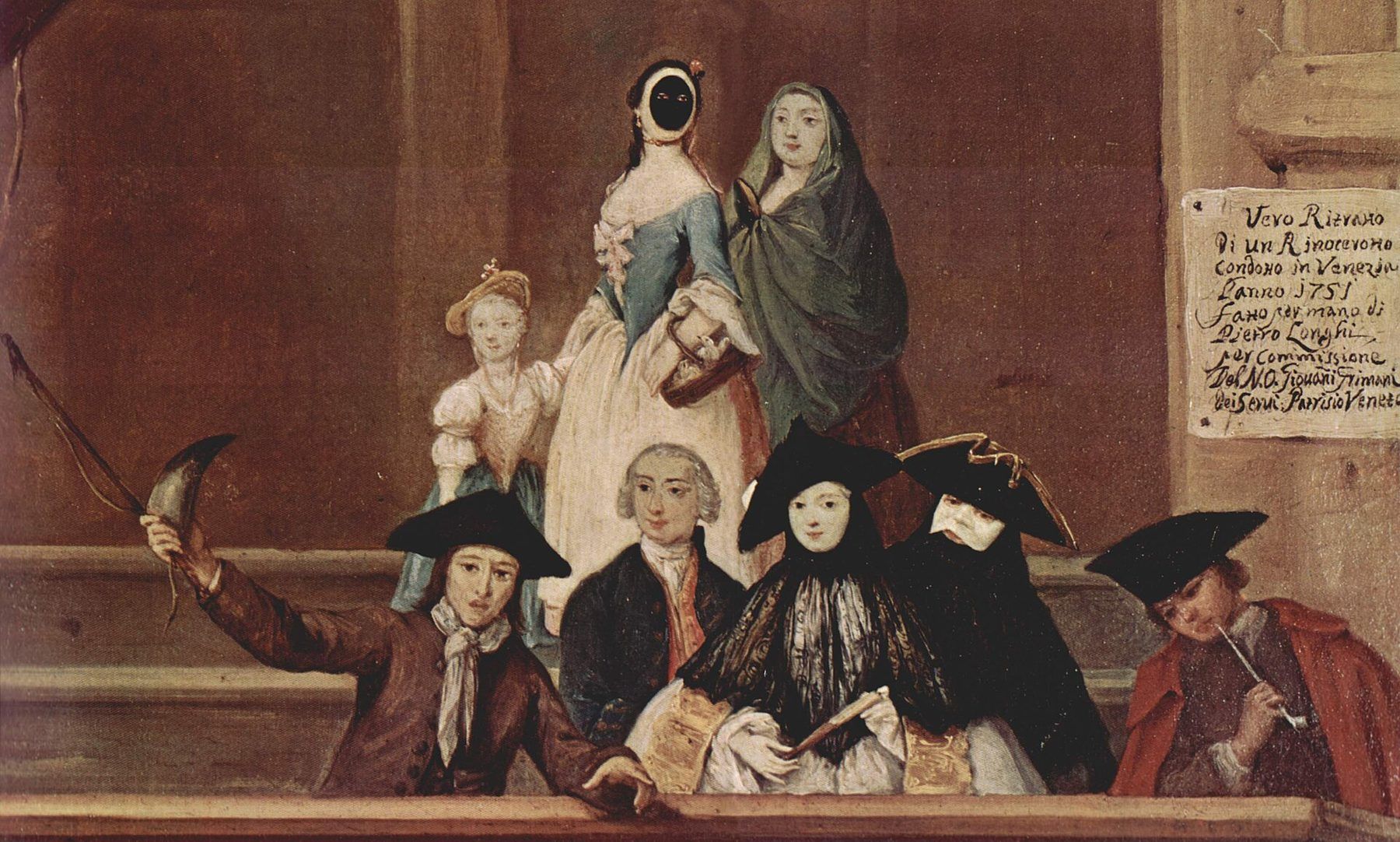
The moretta was an oval mask of black velvet, originally worn by women. It had no straps: the wearer held it in place by biting a small button on the inside. That made her silent for as long as she wore it, adding to the mystery.
Pietro Longhi painted the moretta in use in 1751, in his famous painting of a rhinoceros on show in Venice. Few people wear one today, which makes it a memorable choice for a photo, although not for a long day out.
The plague doctor: from medicine to Carnival
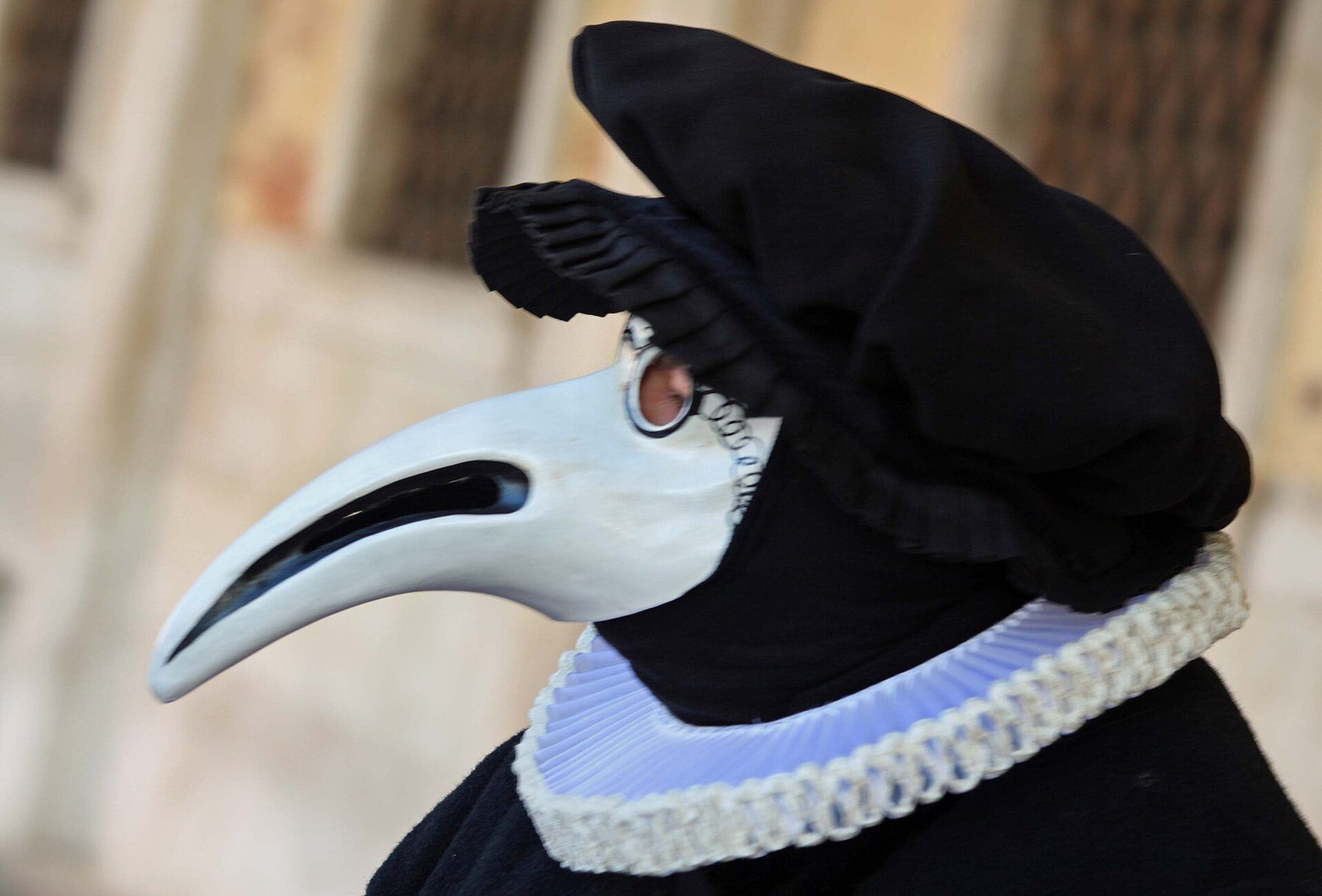
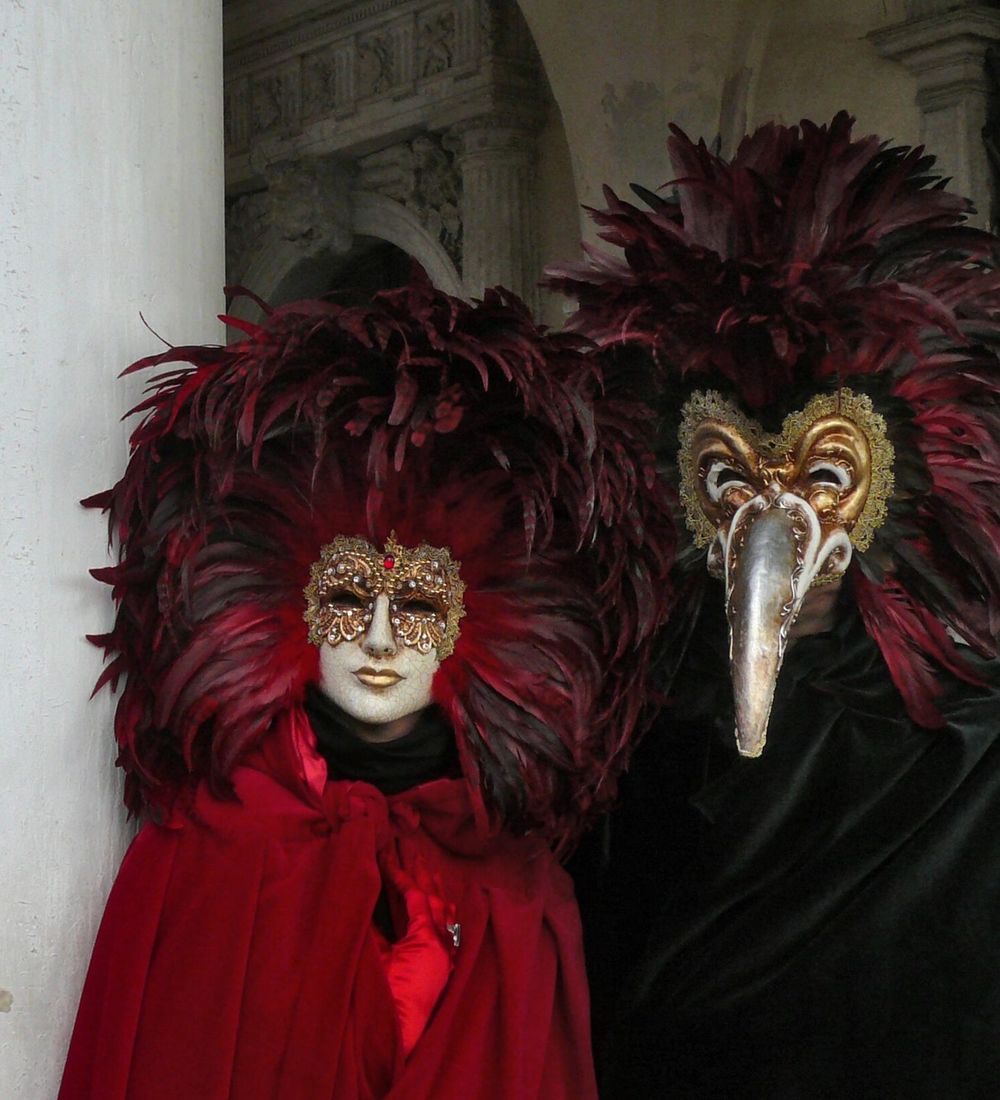
The medico della peste, with its long white beak, is one of the most recognisable costumes in Venice, but it did not start as a Carnival mask. It is based on the protective clothing of 17th-century plague doctors, whose beaks held aromatic substances that were thought to keep disease away.
Wearing it at Carnival is a modern custom. A full plague doctor outfit usually adds a black hat, a long black coat and gloves. The beak is long, so check how well you can see to the sides before walking through crowds.
Commedia dell’arte masks
Commedia dell’arte was Italy’s popular theatre of stock characters, and its masks are part of Carnival too. Arlecchino, Pantalone and the Zanni servants wear half masks, often of leather, with exaggerated noses and brows. Colombina, the clever maid, gave her name to the decorated half mask.
During Carnival 2026, the official programme set up wooden Commedia stages in Campo Santo Stefano, Piazza San Marco and other squares. Check the 2027 programme, expected in the new year, for this year’s performances.
How to choose and buy a real Venetian mask
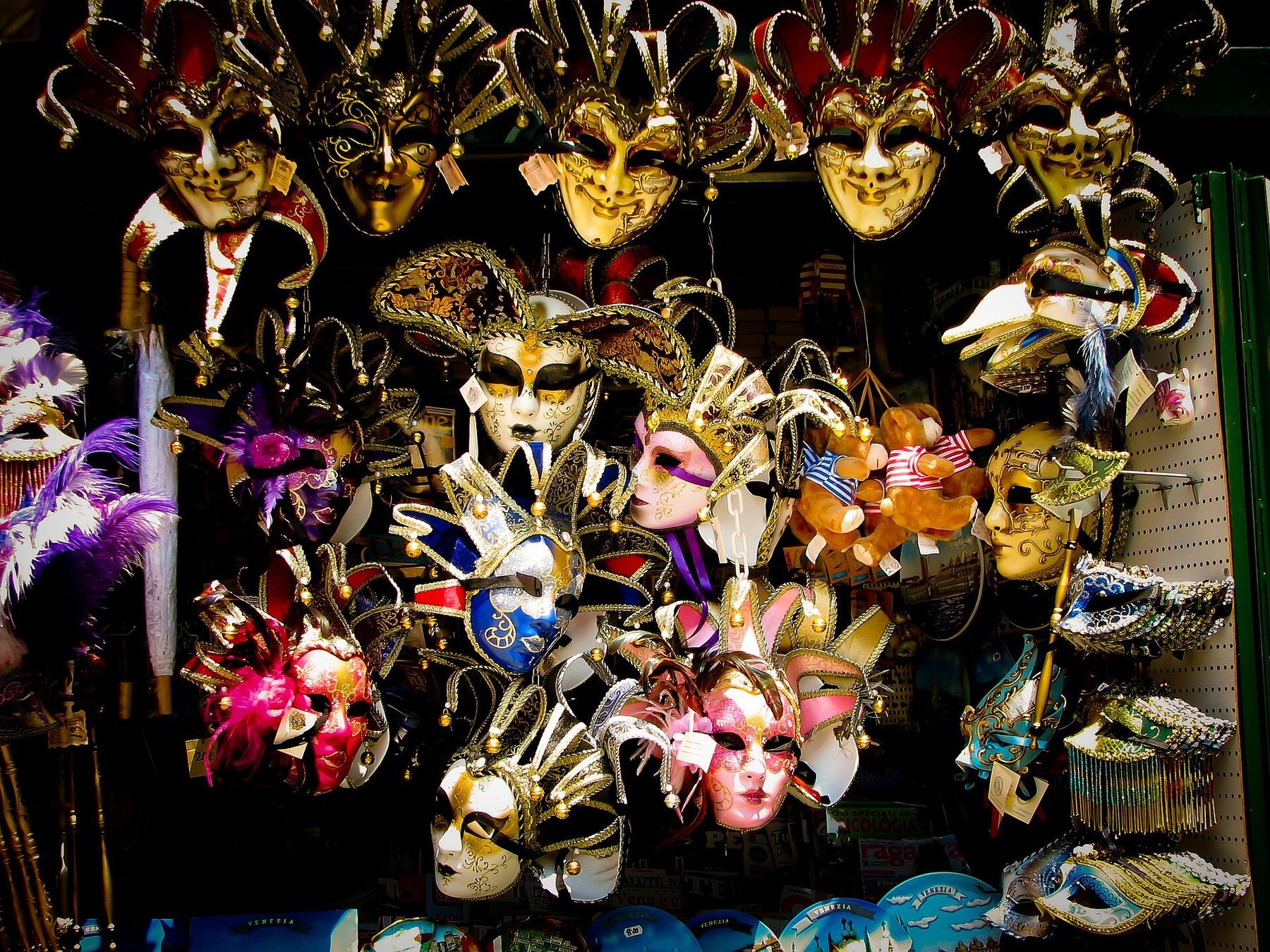
A handmade mask costs more than a souvenir-stall mask, but it is lighter, fits better and is made to be worn. The official Carnival site highlights Venetian makers such as Ca’ Macana, Materdomini Mask and Blue Moon Venice. Many workshops also run classes where you decorate your own.
Try the mask on before you pay. Check that you can see your feet and the people beside you, that it does not press on your nose and that the ribbon or stick suits how you will use it.
- Ask where and how the mask was made.
- Look inside: a papier-mâché mask is light and matte on the inside.
- Check the fit with glasses, a hat or a wig if you will wear them.
- Ribbon for a long day; a stick (baton) for photos and short wear.
- Ask for a box if you are flying home with it.
A FEW GOOD QUESTIONS
Common questions
What is the most famous Venetian mask?
The bauta: a white full-face mask with a jutting chin, worn with a black tabarro cloak and a tricorn hat. Its shape lets the wearer talk, eat and drink without taking it off.
Why did women hold the moretta mask in their teeth?
The moretta had no straps. The wearer bit a small button on the inside to keep it in place, so she could not speak while wearing it.
Is the plague doctor a traditional Venetian Carnival mask?
Not originally. It is based on the clothing of 17th-century plague doctors. Wearing it at Carnival is a modern custom, but it is now one of the most popular costumes in Venice.
What are traditional Venetian masks made of?
Most are papier-mâché (cartapesta), shaped in a plaster mould and painted by hand. Commedia dell’arte half masks are traditionally leather.
Sources & how we prepare this guide
Official planning information checked November 20, 2026. This is an editorial suggestion, and Trip & Kit has not attended the linked tours. Confirm current fares, visitor rules and supplier details for your date.
- Venice Carnival (official): masks and costumes
- Venice Carnival (official): the tradition of the Carnival
- Venice Carnival (official): Carnival 2026 programme, including the Commedia dell’arte stages
- Ca’ Macana: how a Venetian papier-mâché mask is made
- Wikipedia: Carnival of Venice, masks and their history
- Wikipedia: plague doctor costume