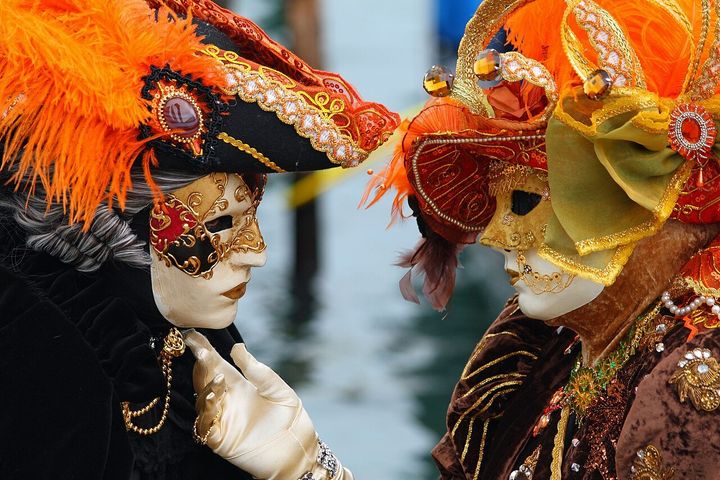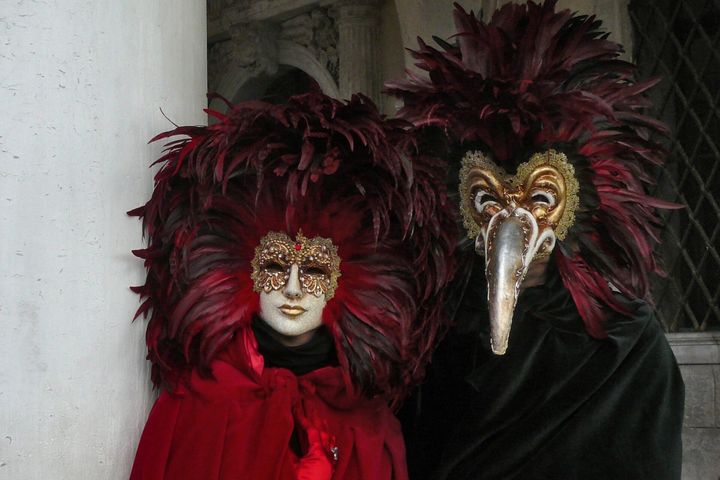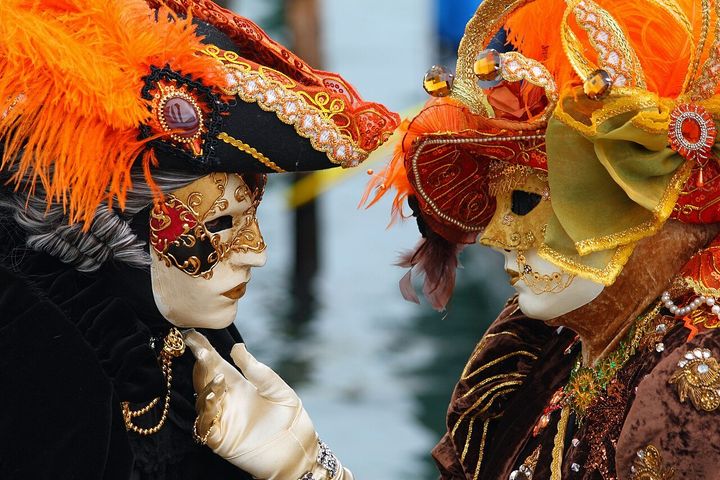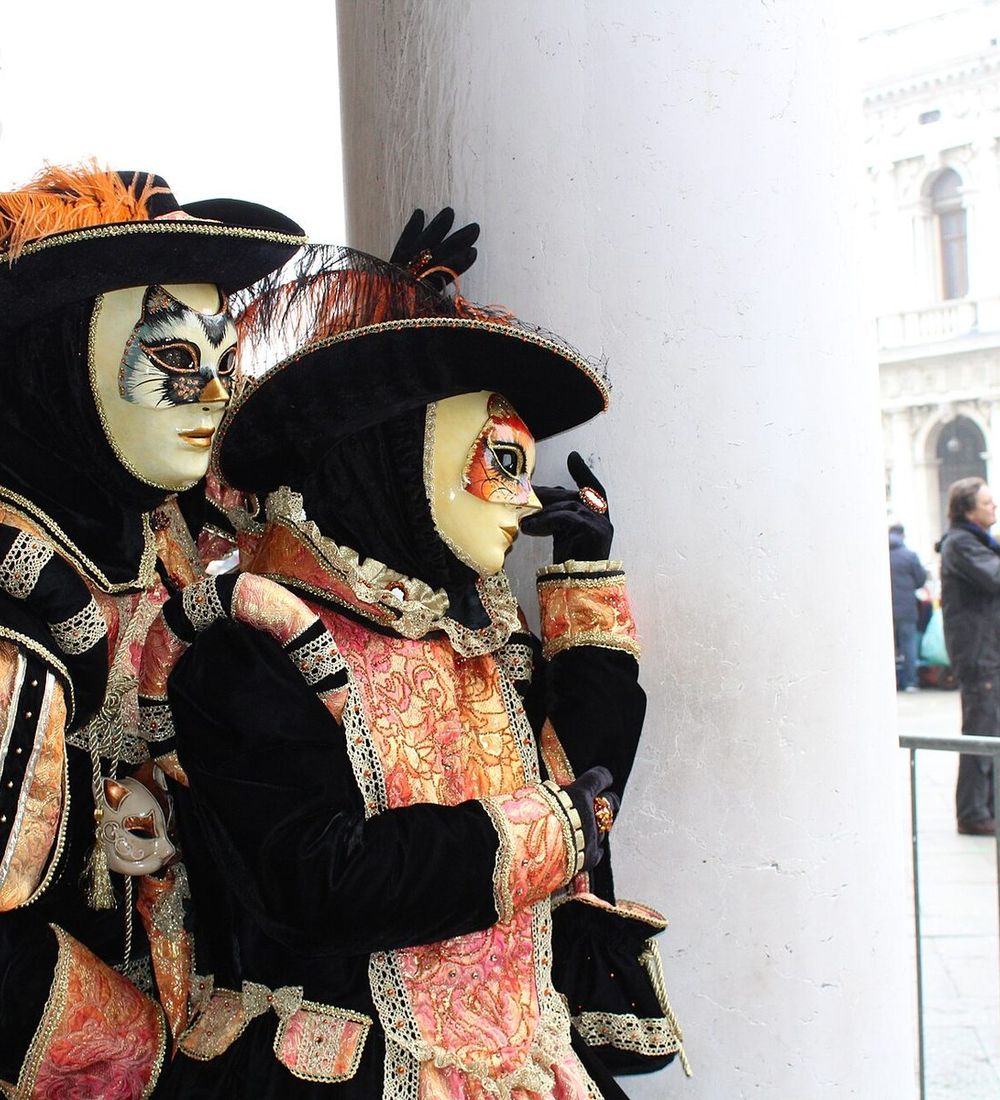
The costumes you see at Venice Carnival look like they stepped out of an 18th-century painting, and many of them borrow its materials. This guide explains what those outfits are made of, which fabrics are worth paying for and which modern alternatives make more sense for a cold, busy day in Venice.
Start here
A traditional Venetian costume is built from silk, velvet, damask or brocade, finished with lace, braid and a mask made of papier-mâché (cartapesta) or leather. You do not need real silk: satin or brocade look-alikes cost less and cope better with a damp February day. Wear warm layers underneath and keep long hems off wet stone. For the 2027 Official Dinner Show, a period costume is required.
- Classic fabrics
- Silk, velvet, brocade, lace
- Traditional mask
- Papier-mâché (cartapesta)
- Carnival 2027
- 23 Jan – 9 Feb
The fabrics behind a Venetian costume
| Fabric | What it looks like | Best for | Watch out for |
|---|---|---|---|
| Silk taffeta | Crisp, with a soft sheen and a rustle | Full skirts, bodices, waistcoats | Creases easily; rain can leave marks |
| Satin | Smooth and glossy | Linings, sashes, lighter gowns | Shows every mark and slips when you sit |
| Velvet | Deep, soft pile | Cloaks, coats, winter gowns | Heavy; the pile flattens when wet |
| Damask and brocade | A woven, raised pattern | Bodices, coats, panels | Stiff; cut edges fray quickly |
| Lace | Open needle or bobbin work | Collars, cuffs, sleeve ruffles | Catches on jewellery and feathers |
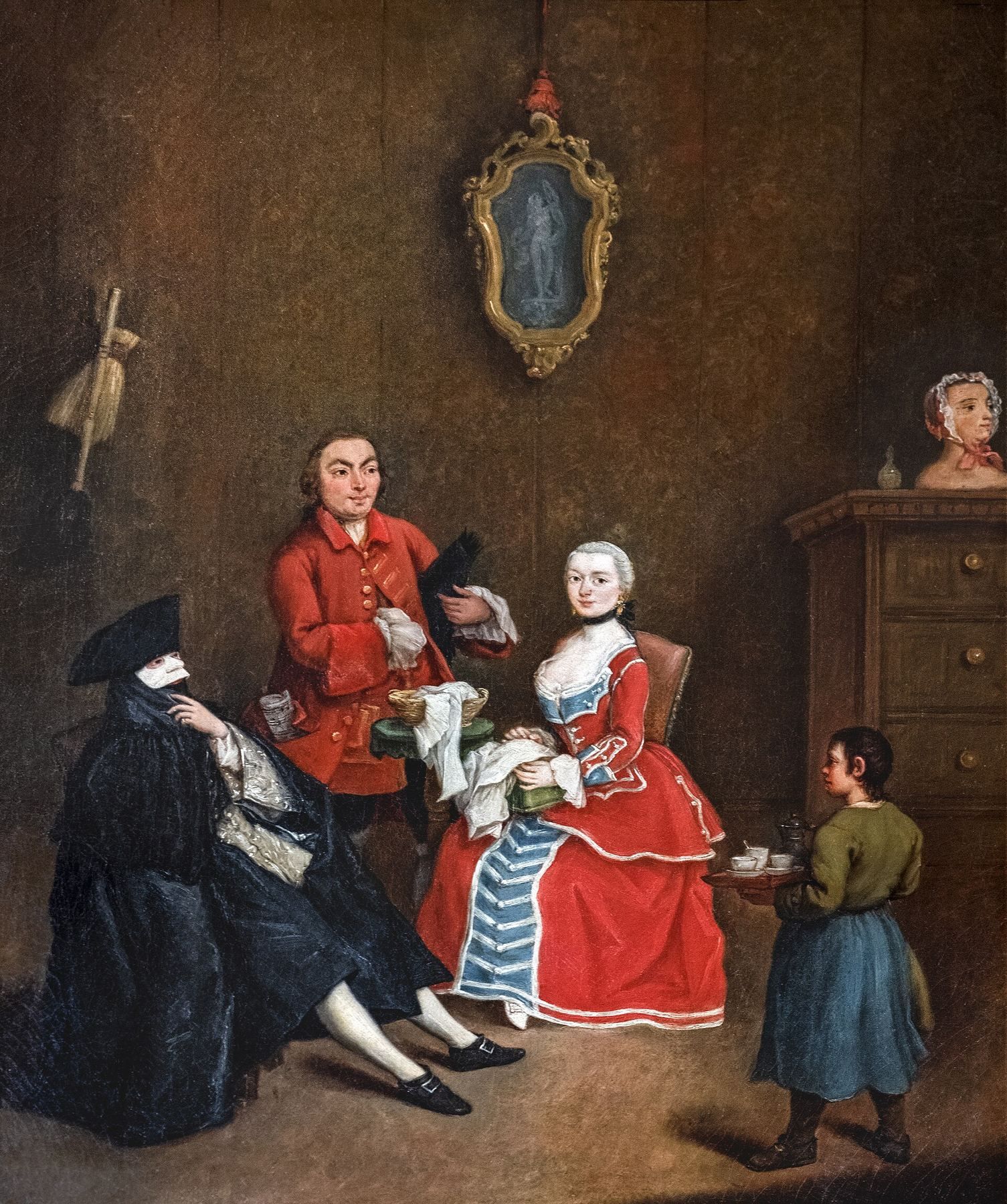
Most Carnival costumes take their look from 18th-century Venice. Wealthy Venetians wore patterned silks, velvet and fine lace, and the city was a major weaving centre. That heritage is still alive: Tessitura Luigi Bevilacqua weaves velvets, damasks, lampas and brocades, and makes its soprarizzo velvet by hand on 18 looms from the 18th century that once belonged to the Republic’s silk school.
You can see the real thing at Palazzo Mocenigo, the city museum for the history of textiles, costume and perfume. Its rooms show how a Venetian noble family lived in the 17th and 18th centuries, with historic garments on mannequins. It is a good stop before you choose fabric or hire a costume.
Real silk or a modern look-alike?
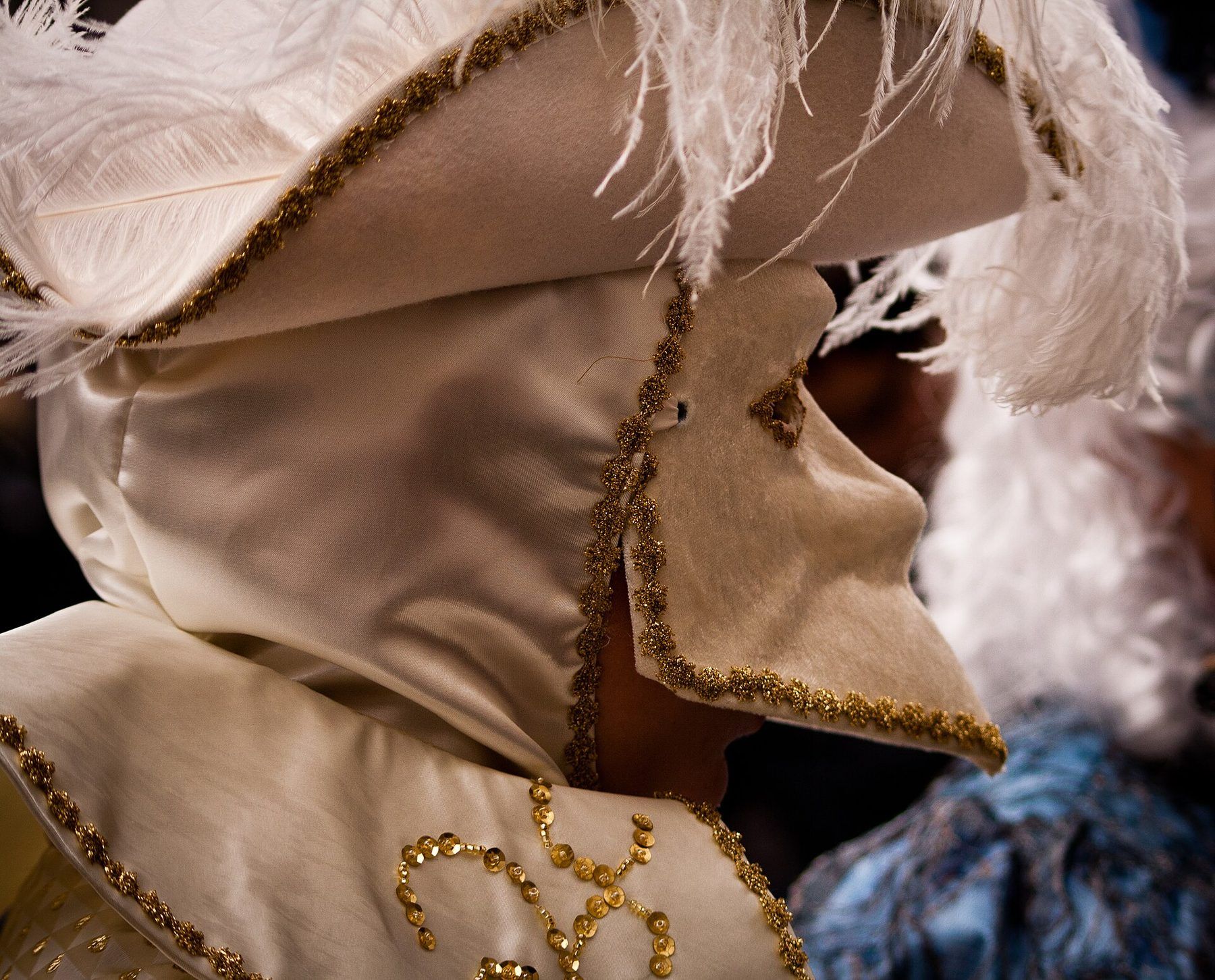
Real silk breathes and drapes beautifully, but it is expensive and does not like rain. Most costumes you see on the street use synthetic satin, taffeta or brocade. From a few metres away they look just as rich, they cost far less and a damp day will not ruin them.
Choose by weight as well as shine. A heavier brocade or velvet hangs better and keeps you warmer than thin, shiny fabric. A lining stops a scratchy fabric from rubbing and helps the costume keep its shape.
- Feel the weight: thin, shiny fabric creases and looks cheap in photos.
- Check for a lining in bodices and coats.
- Read the care label: some costumes can only be dry-cleaned.
- Try a full outfit on before you commit to making or buying one.
Good to know Do a rain test at home: dab a drop of water on a scrap or a hidden seam. If it leaves a ring, carry a cloak or plan indoor time when the forecast is wet.
What a Venetian mask is made of
| Material | How it feels | Good to know |
|---|---|---|
| Papier-mâché (cartapesta) | Light, breathes, follows the face | The traditional Venetian method; ask who made it |
| Leather | Soft and durable | Classic for Commedia dell’arte half masks such as Arlecchino |
| Ceramic or glass | Heavy and rigid | Check the weight and fastening before planning to wear it |
| Plastic | Cheap and stiff | Often sold as Venetian; usually mass-produced |
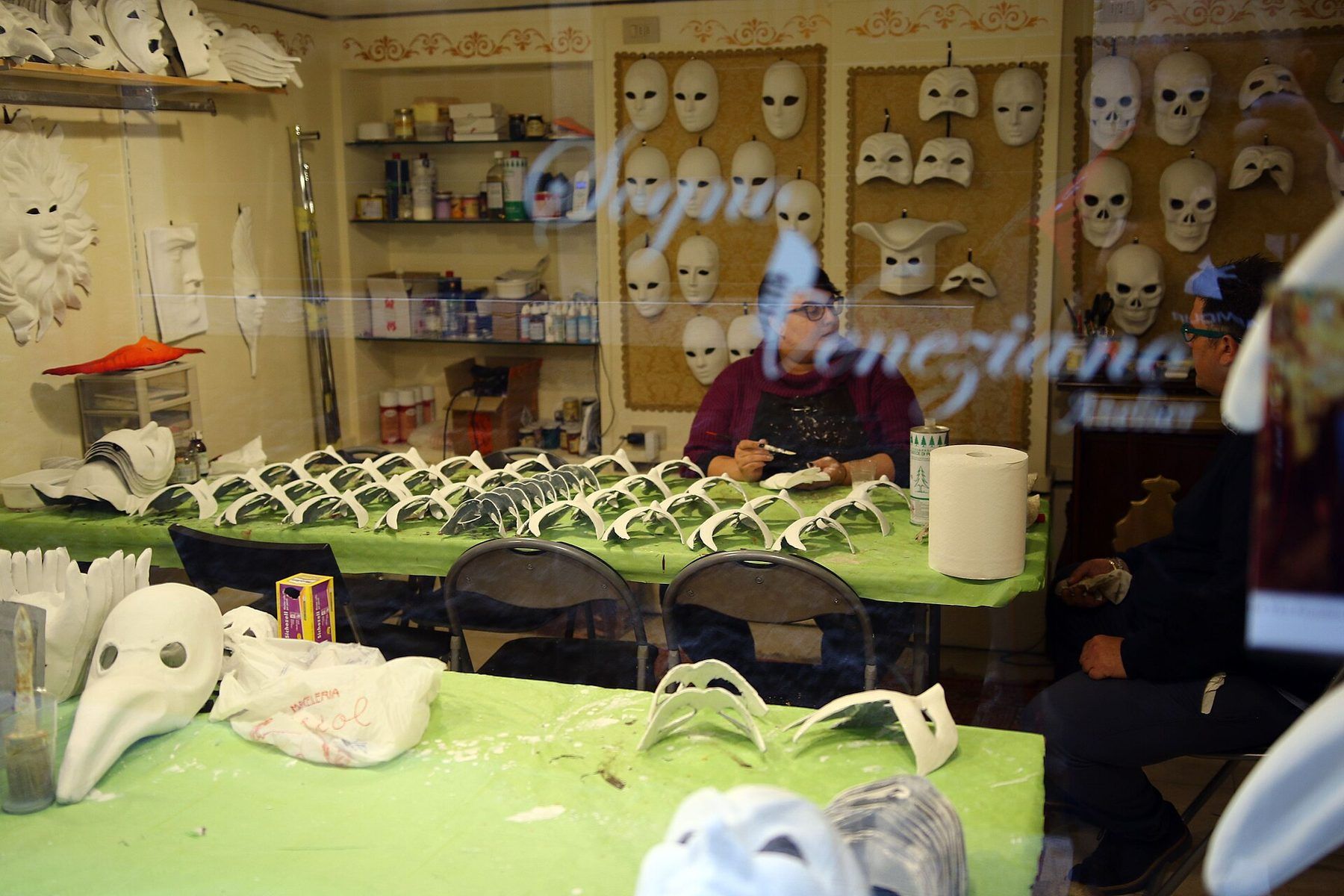
A traditional Venetian mask is papier-mâché, called cartapesta in Italian. At the Ca’ Macana workshop, a mask starts as a clay sculpture. Plaster is poured over it to make a mould, which is coated with Vaseline and filled with at least three layers of cartalana: an absorbent wool paper soaked in water and glue.
The mould then dries on a heat source; a full-face mask can take up to 24 hours. The maker removes the mask, opens the eyes and gives it a white base before painting and decorating. The result is light and flexible and shapes itself to the face, which matters when you wear it for hours.
Good to know Ask the seller where the mask was made and what it is made of. A workshop that makes its own masks can usually show you blank masks or moulds.
Lace, braid and feathers: the finishing touches
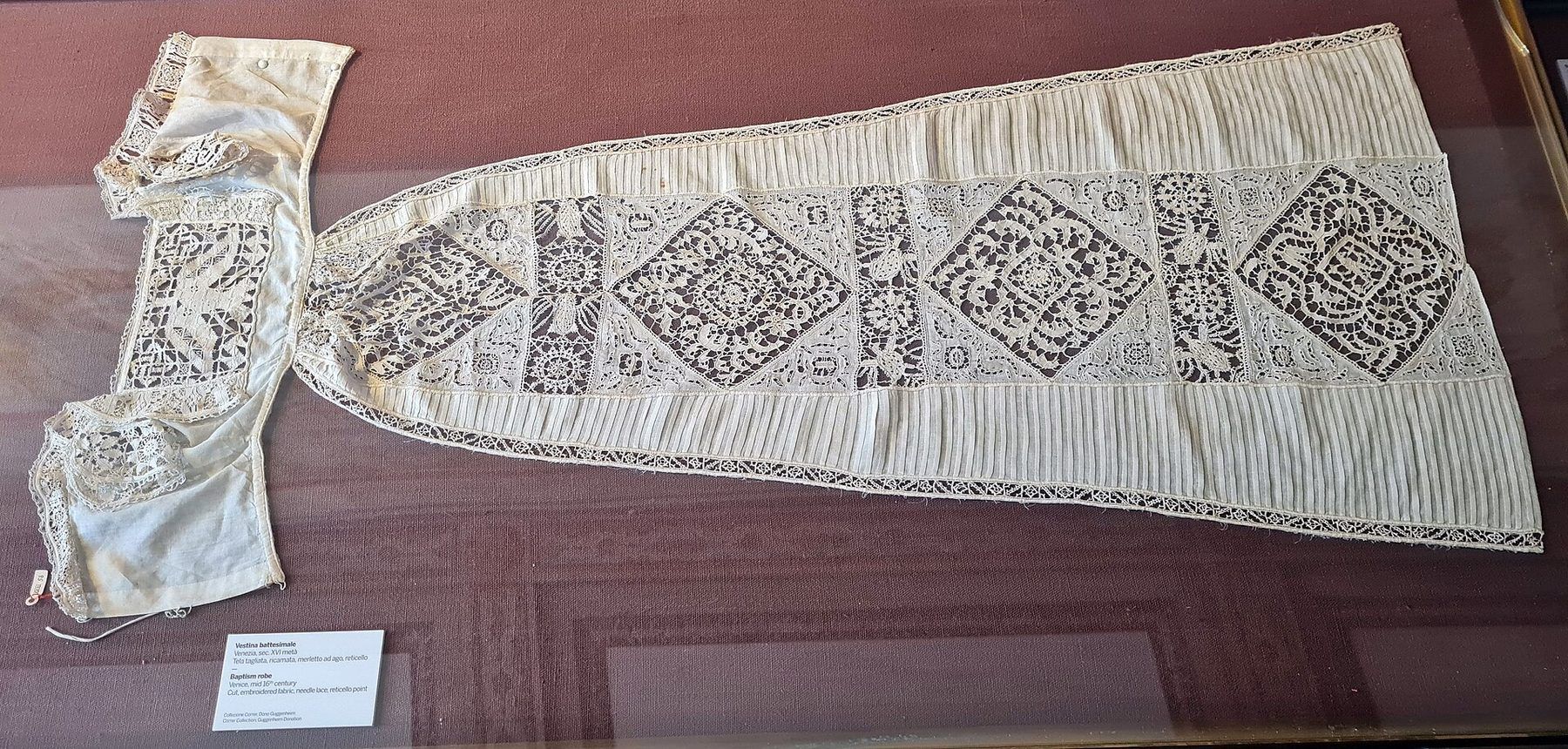
Lace was one of Venice’s great luxury crafts, and the island of Burano is still known for it. The Lace Museum on Burano traces the city’s lace-making tradition through the centuries. A lace collar or pair of cuffs is the quickest way to make a simple outfit look Venetian.
Braid along the edges hides seams and catches the light, and a tricorn hat or feathered headpiece completes the silhouette. Keep the trims secure: loose feathers and beads fall off in crowds, and long ribbons catch on bridges and railings.
- Lace: collars, cuffs and sleeve ruffles.
- Gold or silver braid: edges of coats, bodices and cloaks.
- Feathers: on hats and masks; check that they do not shed.
- A tricorn hat: the classic partner for the bauta mask.
Dress for February: warm layers under the costume
Carnival takes place in winter, and you will spend most of the day outside. Build the costume over thin thermal layers, and choose a size with room for them. A long cloak, like the traditional tabarro, is the easiest warm outer layer: it covers everything and comes off indoors.
Shoes matter more than any accessory. Venice means bridges, steps and stone that gets slippery in the wet. Some workshops postpone or cancel sessions during exceptional high tides, so keep a little flexibility in your plans.
- Thermal top and leggings under the costume.
- Shoes you have already walked in, with grip.
- A hem that clears the ground by a few centimetres.
- Gloves, and a small bag for phone, card and medicine.
- A plan for your costume if it rains: a cloak or an indoor stop.
Good to know Do a full rehearsal at home: walk for half an hour, climb stairs and sit down in the complete outfit, mask included.
Hire, buy or make: where to start in Venice
| Option | Best for | Ask before paying |
|---|---|---|
| Hire from an atelier | A ball, dinner show or photo day | Fitting time, deposit, what is included, return time |
| Buy a ready-made costume | Several days or future events | Fabric, lining, sizing and how it packs |
| Make your own | A creative project before the trip | Fabric weight, warmth and how it travels |
For one special evening, hiring is usually simplest. For the 2027 Official Dinner Show, the organiser requires a period costume and lists four partner ateliers with discounted hire: Atelier La Bauta, Atelier Antonia Sautter, Atelier Le Boudoir and Atelier Nicolao. You need your booking voucher number to get the agreed rate.
For masks, the official Carnival site highlights the work of Venetian makers such as Ca’ Macana, Materdomini Mask and Blue Moon Venice. Buying from a maker costs more than a souvenir stall, but you get a mask that is made to be worn.
A FEW GOOD QUESTIONS
Common questions
What fabrics are Venetian Carnival costumes made of?
Traditional costumes use silk, velvet, damask and brocade, finished with lace and braid. Most costumes today use synthetic satin, taffeta or brocade, which look similar, cost less and handle damp weather better.
What are Venetian masks made of?
Traditional Venetian masks are papier-mâché (cartapesta): layers of wool paper soaked in water and glue, shaped in a plaster mould and then painted. Commedia dell’arte half masks are classically made of leather.
What should I wear under a Venice Carnival costume?
Wear thin thermal layers and choose a costume with room for them. Add a long cloak as an outer layer, gloves and comfortable shoes with grip, because you will be outside on bridges and wet stone.
Can I wear an evening dress to the Official Dinner Show?
No. For 2027 the organiser requires a period costume and does not accept evening dress or a tuxedo. Its four partner ateliers offer discounted costume hire if you give your booking voucher number.
Sources & how we prepare this guide
Official planning information checked November 20, 2026. This is an editorial suggestion, and Trip & Kit has not attended the linked tours. Confirm current fares, visitor rules and supplier details for your date.
- Venice Carnival (official): 2027 dates, 23 January – 9 February
- Venice Carnival (official): masks and costumes
- Venice Carnival (official): Official Dinner Show 2027, dress code and partner ateliers
- Ca’ Macana: how a Venetian papier-mâché mask is made
- Tessitura Luigi Bevilacqua: Venetian velvets, damasks and hand-woven soprarizzo
- Palazzo Mocenigo: museum of the history of textiles, costume and perfume
- Lace Museum, Burano: the Venetian lace-making tradition