The names are easy to mix up. A packing cube sorts clothes. A compression cube sorts and squeezes them. A compression bag usually removes air from a flexible pouch. Choose the job you need before buying a set.
Start here
Use an ordinary cube for easy access, a zip-compression cube for soft clothes that need less bulk, or a roll or vacuum bag when its closure and air-removal method suit the trip. None makes your luggage lighter.
- Normal cube
- Organises your clothes
- Compression cube
- Adds a second zip to reduce bulk
- Compression bag
- Air-removal method varies by model
Know which type you are comparing
| Type | Main job | Useful for | Check first |
|---|---|---|---|
| Packing cube | Groups clothing in one pouch | Easy unpacking and sorting | Its size inside your bag |
| Zip-compression cube | Groups and compresses soft clothes | A flatter clothing bundle | The second zip and packed thickness |
| Compression bag | Pushes or draws air out of a pouch | Some bulky soft items | Whether it needs rolling, a pump or a vacuum |
Choose ordinary cubes when access comes first
An ordinary packing cube gives socks, tops or underwear a clear place inside your bag. You can lift one out and see what you packed without pulling every item loose.
Use a pouch you already own if it does the same job. A cube is useful because it helps your routine, not because every traveller needs a matching set. Soft, lightly packed cubes can be easier to fit around other items.
Choose zip compression for soft clothing
A compression cube has a main opening and an extra zip around the outside. Pack the clothes, close the main zip, then close the compression zip carefully. Keep loose fabric away from the teeth and stop if the zip strains.
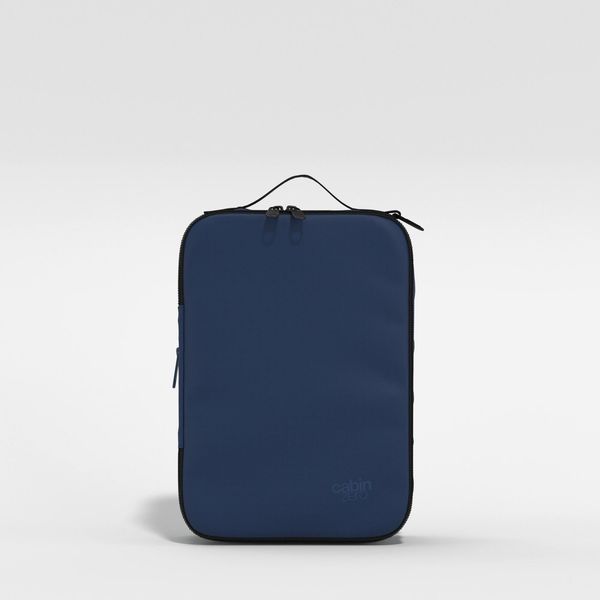
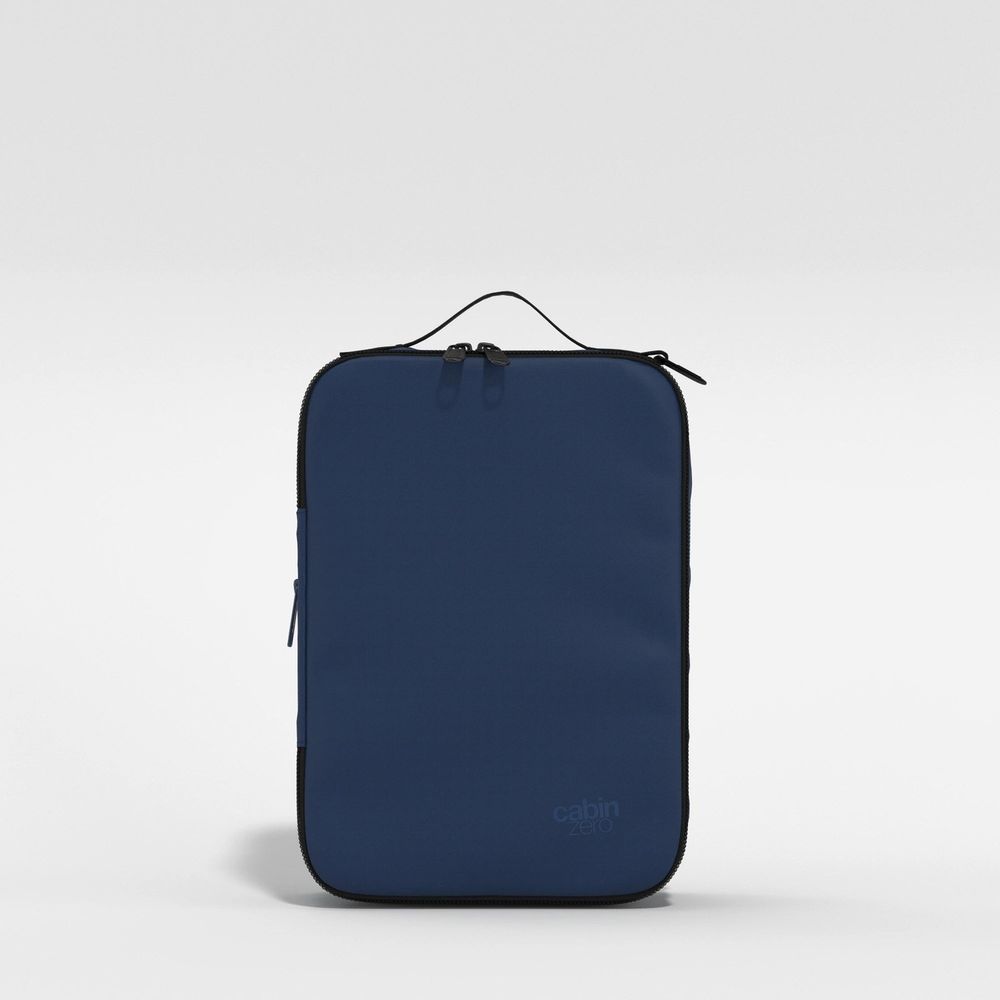
The CabinZero Lux Medium lists 25 × 17.5 × 13 cm open and 25 × 17.5 × 8 cm compressed. Those are manufacturer dimensions; the result with your clothing will vary. The cube itself adds 144 g to the load.
Check how a compression bag removes air
Some compression bags release air when you roll them. Others need a pump or a vacuum. Check the instructions before choosing one for a trip where you may not have that equipment on the way home.
Air-removal bags may be useful for soft spare layers you do not need during the day. Reopening and resealing a bag takes another packing step. Check whether the material and closure provide any water protection; the word compression alone says nothing about waterproofing.
Leave room for the rest of the kit
Pack your clothes alongside your wash pouch, shoes and chargers before deciding how many cubes to buy. A tightly compressed block can be harder to fit than a softer bundle, especially in a small backpack.
Compression changes bulk rather than weight. Weigh and measure the final packed bag if you fly. Keep damp clothes separate from clean clothes and let them dry when you can. A water-resistant cube is not a sealed container for wet items.
A FEW GOOD QUESTIONS
Common questions
Are packing cubes and compression bags the same?
No. A normal cube mainly organises clothes. A zip-compression cube also reduces soft clothing bulk. A compression bag uses a model-specific way of removing air from a pouch.
Do compression cubes make luggage lighter?
No. The clothes keep the same weight and the cube adds its own weight. Check the complete packed bag against your carrier’s limit.
Do I need a pump for a compression cube?
A zip-compression cube uses its extra zip, so it does not need a pump. Some compression bags do need a pump or vacuum; read their instructions.
Can I use a compression cube as a dry bag?
Only if the maker specifically describes and rates it for that job. The CabinZero cube here is listed as water-resistant, not as a waterproof dry bag.
Sources & how we prepare this guide
Manufacturer details and official guidance checked October 17, 2026. We have not tested these products. Packing suggestions should be adjusted for your plans, the forecast and local rules. Confirm the current model, specifications and delivery with the merchant.