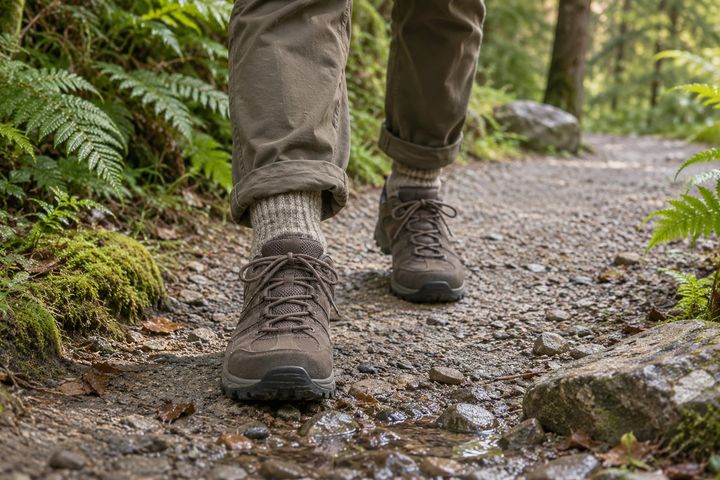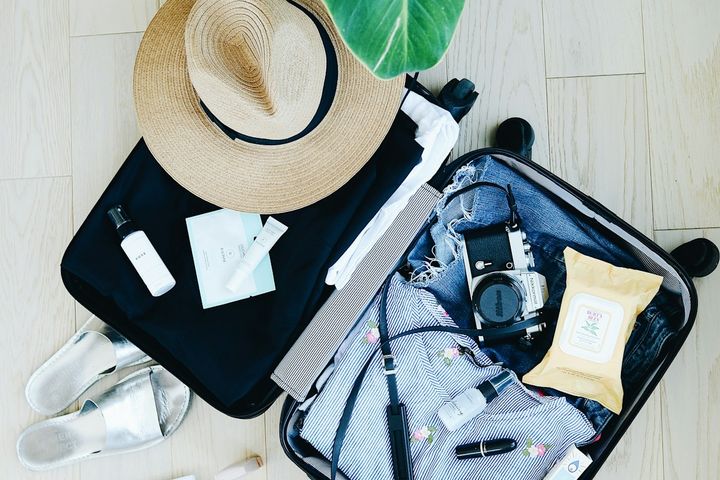
A thicker sock can make a pair of shoes feel snug in the store and too tight by the end of a city walk. When you’re packing for several days on foot, put the shoes and socks together before you choose either one. Start with the pair you already reach for on long walks.
Start here
Pick a cuff that sits above your shoe collar and the lightest cushioning that feels comfortable in the shoe. A lightweight pair suits warm days or snug shoes. A cushioned midweight pair makes sense in cooler weather when you have room to move your toes.
- Cuff
- Above the part of the shoe that rubs
- Cushion
- Check it with the shoe on
- Day bag
- Keep one dry pair handy in wet weather
Match sock thickness to the shoe
| Shoes and conditions | First pair to try | Fit check |
|---|---|---|
| Snug walking shoes in warm weather | Lightweight or lightly cushioned | Toes spread comfortably and fabric lies flat |
| Roomier trail shoes for cool walks | Midweight with cushioning | Heel stays put without crowding the forefoot |
| Mid boots on wet trails | A sock that reaches above the boot collar | Cuff clears the collar while walking downhill |
Make room for your foot before adding cushioning. Put on the sock, lace the shoe and check the toe box standing up. If your toes feel pressed together or the sock bunches across the forefoot, the extra padding will be a poor trade for that shoe. A thin or lightly cushioned sock may feel better with snug walking shoes.
A midweight sock can make sense with roomier hiking shoes in cool weather. For a warm city day, try the lighter pair first. If your trip includes both conditions, pack one of each and check both in the same shoes before you leave.
Check where the cuff lands
Put the shoes on and bend your ankles as if you’re walking uphill. Check where the back and sides of the collar touch the sock. A sock cuff just above those contact points gives the shoe less opportunity to rub bare skin. Names like crew and micro crew vary across brands, so use the product’s measurements and your own shoe.
Check the size chart using the foot measurements or shoe size the brand asks for. Walk at normal pace for a few minutes. If the sock slips down or the fabric collects under your toes, try a different size or cut before committing to a multipack.
One midweight option for cooler days
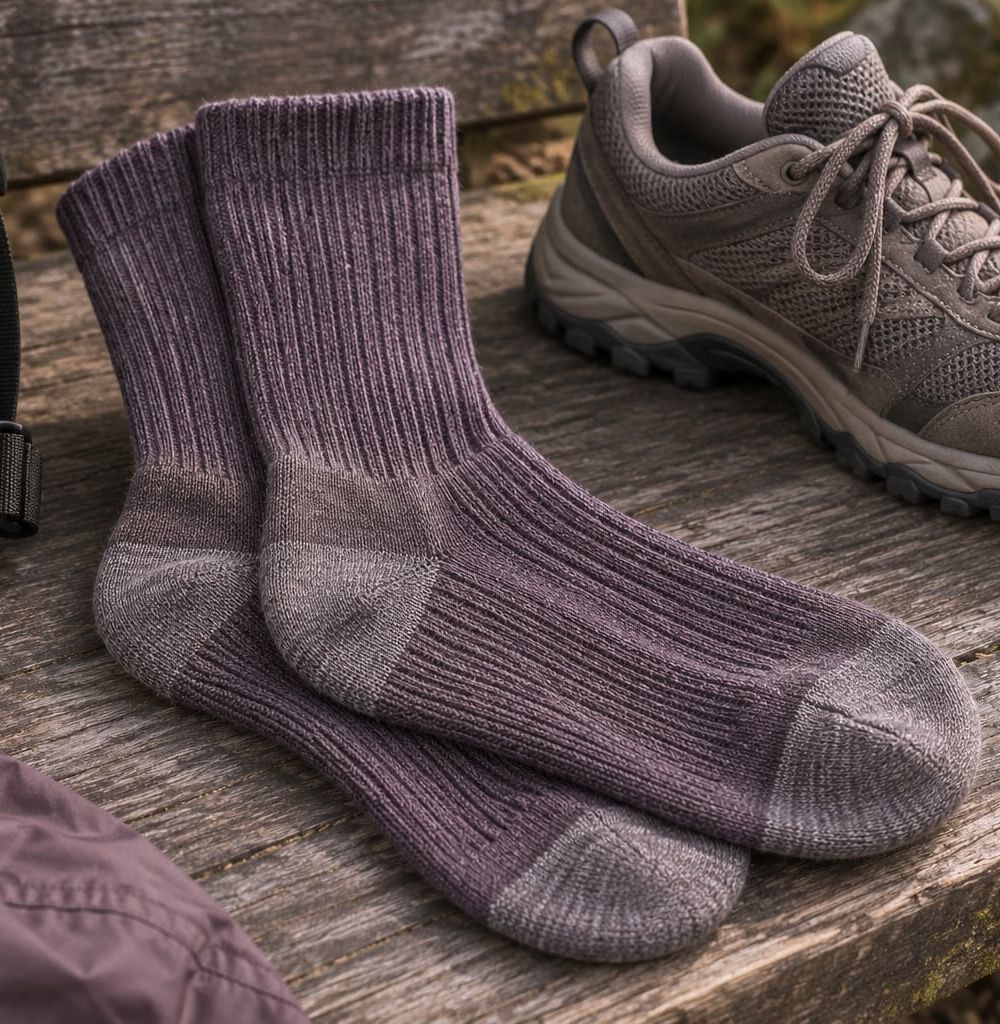
If you have space in the shoe for cushioning and need a pair that clears a low hiking shoe, this model is a reference point. Check the height against your actual boot if you wear a higher cuff.
-
Darn Tough Women’s Hiker Micro Crew Midweight Socks
This women’s midweight model uses a merino blend and targeted cushioning. Its micro-crew height can work above a low shoe, while the fit still depends on your shoe and foot.
View on Amazon
Pack enough to finish the day in a dry pair
For a two-night walking trip, three pairs is a reasonable starting point: wear one, keep a dry change in your day bag and leave one at the hotel for the next morning. You may need fewer for a dry trip with laundry. If you’ll walk in rain without somewhere to dry socks overnight, keep a spare sealed away from wet clothing.
If you rinse a pair in the sink, follow the care label, press out water in a towel and hang it where air can circulate. A thick pair may take longer than you expect. Keep one clean, dry pair outside that experiment.
A FEW GOOD QUESTIONS
Common questions
Are merino hiking socks always the best for travel?
Merino blends are one option. A synthetic pair that fits your shoe and dries on your schedule can be just as practical for your trip. Compare thickness, fit, drying and comfort.
Are thicker hiking socks better?
Thicker socks can add cushioning and warmth if your shoes have room. When they squeeze your toes or change the fit at the heel, a thinner pair is often the better choice.
How many pairs of socks should I pack for a three-day walking trip?
Three pairs is a useful starting point. Wear one, carry one dry change, and keep a pair for the next day. Adjust for heat, rain and whether you can wash and dry a pair overnight.
Sources & how we prepare this guide
Manufacturer details and official guidance checked November 21, 2026. We have not tested these products. Packing suggestions should be adjusted for your plans, the forecast and local rules. Confirm the current model, specifications and delivery with the merchant.